Heavy Machinery Packing | Safe Industrial Equipment Transportation
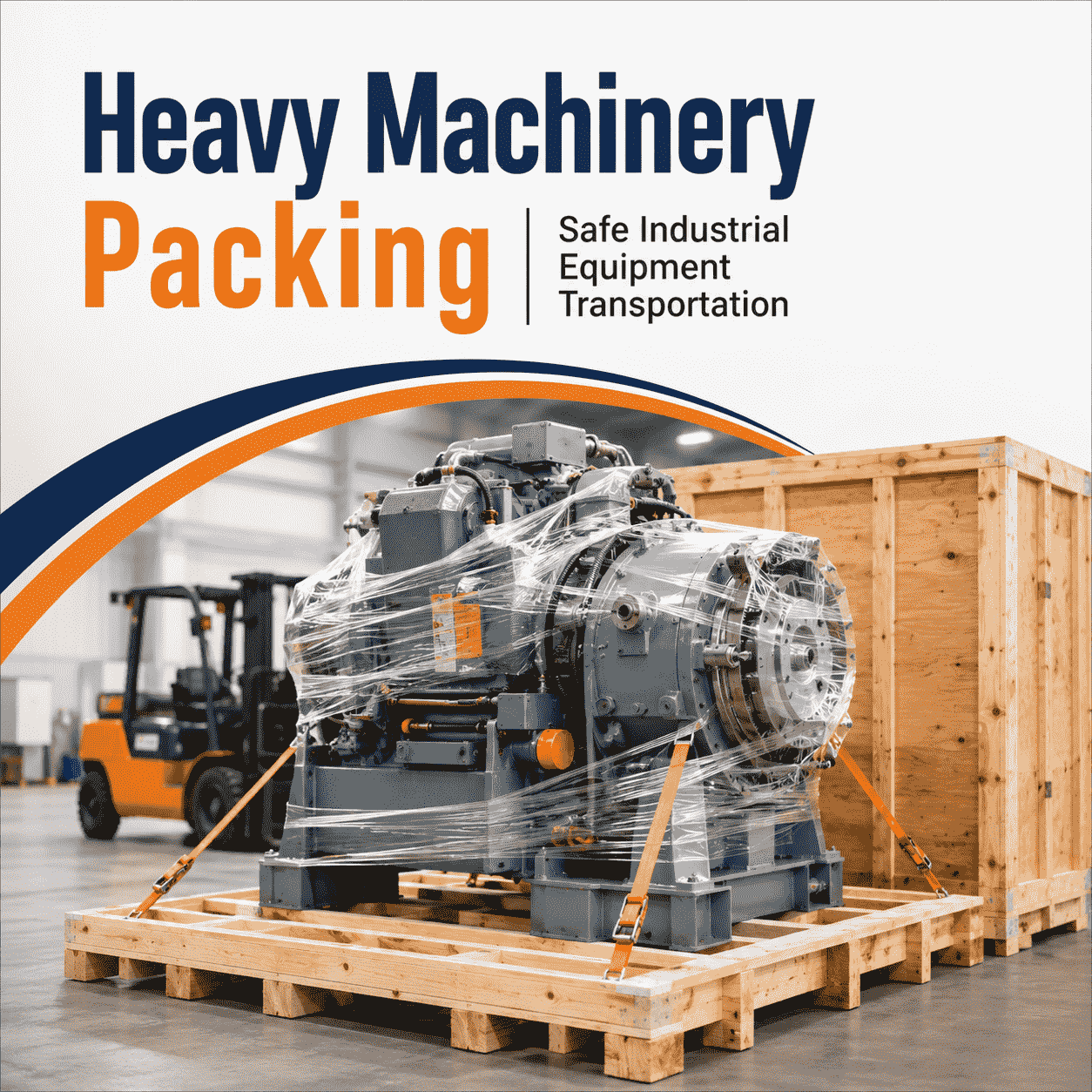
Moving heavy machinery from one location to another requires careful planning. Industrial machines can be large, heavy, expensive, and difficult to handle. Unlike ordinary commercial products, they may require specialized packaging, lifting arrangements, internal protection, and cargo securing.
This makes heavy machinery packing an important part of industrial transportation.
A well-planned machinery packaging system can help support the equipment, reduce unnecessary movement, simplify handling, and provide additional protection throughout the transportation process.
What Is Heavy Machinery Packing?
Heavy machinery packing is a specialized industrial packaging process designed to transport large, heavy equipment.
It may involve a combination of:
- Wooden crates
- Wooden boxes
- Wooden pallets
- Internal packing materials
- Moisture protection
- Vacuum packing
- VCI packing
- Blocking and bracing
- Container lashing
- Container choking
The exact combination depends on the machinery and transportation requirements.
Impact Wood Packers provides heavy-duty wooden crates and customized packaging solutions for large machinery and industrial equipment.
Why Does Heavy Machinery Need Specialized Packaging?
Heavy machinery can present several transportation challenges.
High Weight
Heavy equipment places significant load on the packaging structure and handling equipment.
Large Dimensions
Oversized machines may require specially designed crates and loading arrangements.
Sensitive Components
Some machinery contains delicate mechanical, electrical, or precision components.
Movement During Transportation
Unsecured machinery can shift during transportation, potentially creating avoidable risks.
Environmental Exposure
Moisture, dust, and corrosion can become concerns during long-distance transportation and storage.
For these reasons, industrial machinery packaging should be planned around the actual equipment.
Step 1: Inspect the Machinery Before Packing
The first stage should be understanding the equipment.
Important details include:
- Length
- Width
- Height
- Gross weight
- Centre of gravity
- Lifting points
- Fragile components
- Moving components
- Surface sensitivity
- Moisture sensitivity
- Corrosion risk
This information can influence the final packaging structure.
Step 2: Plan the Packaging Structure
Once the machinery has been assessed, the packaging structure can be planned.
For heavy equipment, custom machinery crates can provide a rigid external structure around the machine.
The crate design can consider:
- Load distribution
- Product dimensions
- Forklift access
- Lifting requirements
- Fastening points
- Base support
- Transportation conditions
Step 3: Stabilize the Machinery
- One of the most important aspects of machinery packaging is preventing unnecessary movement.
- Depending on the equipment, blocking, bracing, fastening, and other securing methods may be used.
- The objective is to keep the machinery properly positioned during handling and transportation.
Step 4: Protect Sensitive Surfaces and Components
- Some machinery contains components that require additional protection.
- Internal packaging materials can be selected according to the product's requirements.
- Sensitive areas may require additional wrapping, cushioning, separation, or protective barriers.
Step 5: Consider Vacuum Packing
- For suitable machinery and industrial products, vacuum packing can provide an additional protective layer.
- Vacuum packing removes air from the packaging environment and can help protect products against moisture, dust, corrosion, and environmental exposure.
- Impact Wood Packers lists vacuum packing as one of its industrial packaging services.
Step 6: Use VCI Packing When Appropriate
- Metal machinery and components can be vulnerable to corrosion, particularly during long-term storage or transportation.
- VCI packing uses volatile corrosion inhibitor technology to provide corrosion protection for suitable metal products.
Impact Wood Packers identifies VCI packing as a solution for protecting metal components from rust and corrosion during - shipping and long-term storage.
Step 7: Build the Wooden Crate or Box
After the machinery has been protected and secured, the external wooden packaging can be constructed.
A customized wooden crate or box should provide:
- Adequate structural support
- Appropriate clearance
- Stable base support
- Suitable lifting or handling provisions
- Protection around the equipment
The design should match the machine rather than rely on a generic crate size.
Step 8: Secure the Cargo Inside the Container
- For international shipments, machinery may be transported inside shipping containers.
- Simply placing a wooden crate inside a container may not be sufficient.
- Container lashing and choking can help secure the cargo and reduce movement during transportation.
- The securing approach should take the machinery's weight, dimensions, centre of gravity, and transportation conditions into account.
On-Site Machinery Packing
Not every industrial machine can easily be transported to a packaging facility.
Large equipment may need to be packed directly at a:
- Factory
- Manufacturing plant
- Warehouse
- Industrial site
- Customer facility
On-site industrial packing can reduce the need to move large machinery before it is properly prepared for transportation.
Impact Wood Packers states that it offers professional on-site industrial packing services for machinery, equipment, and export cargo.
Industries That Require Machinery Packing
Heavy machinery packaging can be relevant to many industries, including:
- Engineering
- Manufacturing
- Automotive
- Electrical equipment
- Heavy engineering
- Industrial equipment
- Export businesses
- Logistics
Heavy Machinery Packing Checklist
Before dispatching heavy equipment, businesses should evaluate:
- Product dimensions
- Product weight
- Centre of gravity
- Lifting points
- Fragile components
- Internal movement
- Moisture exposure
- Corrosion risk
- Transportation method
- Container dimensions
- Cargo securing
- Export requirements
Common Mistakes to Avoid
Using Standard-Size Packaging
Heavy machinery often requires customized packaging. A generic crate may not provide the right fit or support.
Ignoring Weight Distribution
Uneven weight distribution can create handling and stability challenges.
Leaving Excessive Internal Space
Too much space can allow unwanted movement during transportation.
Ignoring Moisture Protection
Long-distance shipments may require additional environmental protection depending on the cargo.
Failing to Secure Containerized Cargo
Heavy equipment should be properly secured according to the transportation requirements.
Benefits of Professional Machinery Packaging
Professional heavy equipment packaging can provide:
- Customized packaging design
- Better cargo stability
- Suitable structural support
- Improved handling
- Protection for sensitive equipment
- Export-oriented packaging options
- On-site packing capabilities
- Additional moisture and corrosion protection options
Conclusion
Heavy machinery packing requires much more planning than ordinary product packaging. From machinery inspection and customized wooden crates to internal protection, vacuum packing, VCI packing, and container lashing, every stage can contribute to safer transportation.
Businesses transporting expensive or oversized industrial equipment should consider the machine's dimensions, weight, sensitivity, handling requirements, transportation method, and destination before selecting a packaging solution.
A customized industrial packaging approach can provide a stronger foundation for reliable machinery transportation and export logistics.